

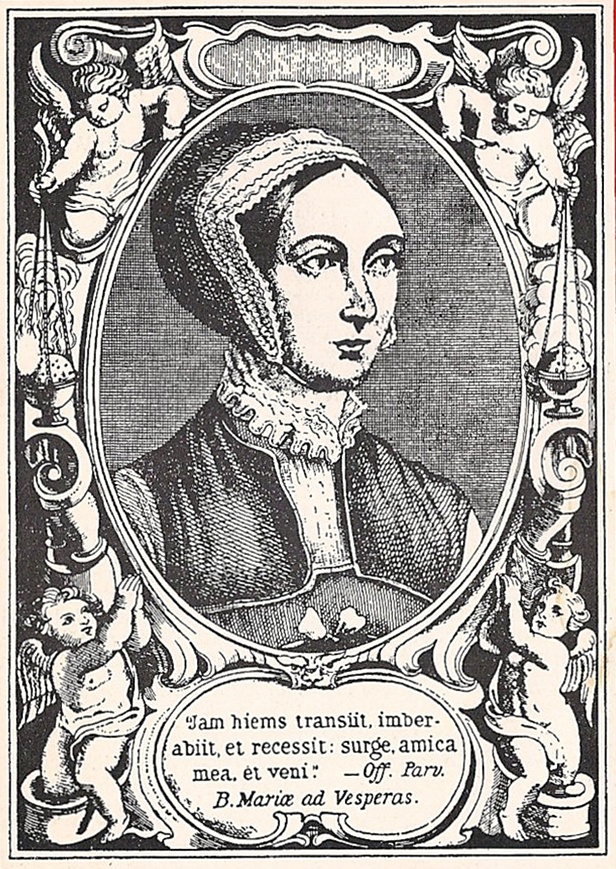
Historical Background:
Religious Tension
The 1500s was a period fraught with conflict and religious turmoil. The divergence between catholics and protestants was a complex and intense battle which underpinned the reign of the Tudor monarchy, causing chaos and instability in the lives of the English citizens. One of the defining factors in this diverging of religious practice came during the years 1532 – 1534 when Henry VIII initiated the break from the Roman Catholic church, and declared himself the supreme head of the church of England. This began a period of intense religious persecution, with catholic martyrdom in particular, becoming a common occurrence. Tensions were only heightened in 1553 when Mary I ascended to the throne and marked the start of a period which would later become known as her reign of terror. In an attempt to secure England’s Catholic roots Mary embarked on a journey of intense protestant persecution, earning herself the nickname ‘bloody Mary.’ Whilst these two monarchs are the figures most commonly associated with religious conflict, these issues persisted through to the reign of Elizabeth, who herself was no stranger to the difficulties of enforcing religious compliance.
Reign of Elizabeth I
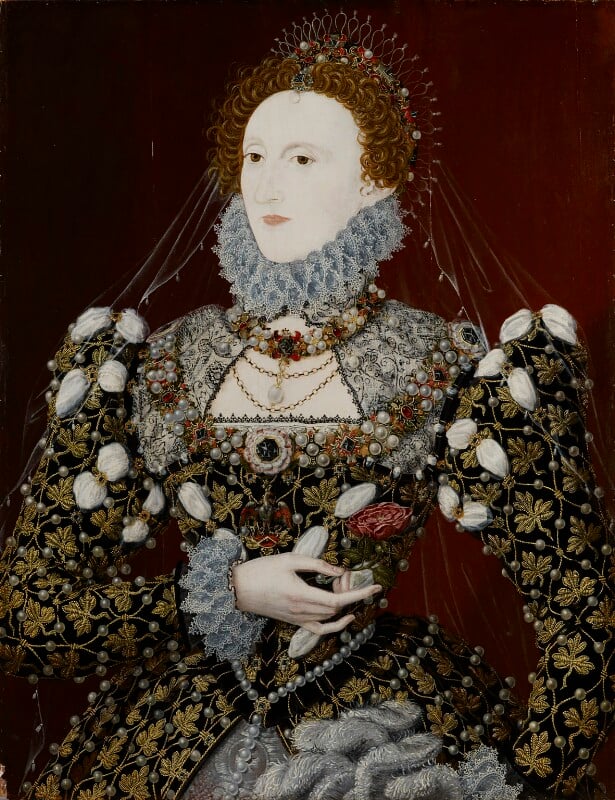
by Nicholas Hillia
oil on panel, circa 1575
31 in. x 24 in. (787 mm x 610 mm)
Purchased, 1865
Primary Collection
NPG 190© National Portrait Gallery, London
Elizabeth I ascended to the throne in 1558, following the death of her sister Mary, and almost immediately began to enact her religious settlement. Initially this settlement appeared to be an attempt at leniency, with a focus on bridging the gap between catholic and protestant denominations. Whilst Elizabeth did enforce the act of supremacy, naming herself supreme governor of the Church of England, she also initiated the act of uniformity. This act brought a new book of common prayer into circulation, which blended protestant doctrine with catholic structures of practice. Despite this, there was little progress made in quelling the religious unrest of the two diverging groups. In 1568 Mary Queen of Scots was forced to abdicate her throne in Scotland and she arrived in England, putting pressure on the authority of Elizabeth. Mary provided a legitimate Catholic alternative to the current English monarch, and as such became the focal point of several catholic plots aiming to threaten Elizabeth’s power and usurp the throne from her control. In 1581 it became treason to convert to Catholicism, and by 1585 all catholic priests were ordered to leave the country or be executed. Due to her supposed involvement in the Babington plot to murder Queen Elizabeth, Mary was eventually put to death in 1587. Despite her initial attempts at inclusivity, like her predecessors Elizabeth went to extreme lengths to assert her religious authority, and it is this tension which provides the backdrop for Margaret Clitherow’s life.
The Life of Margaret Clitherow
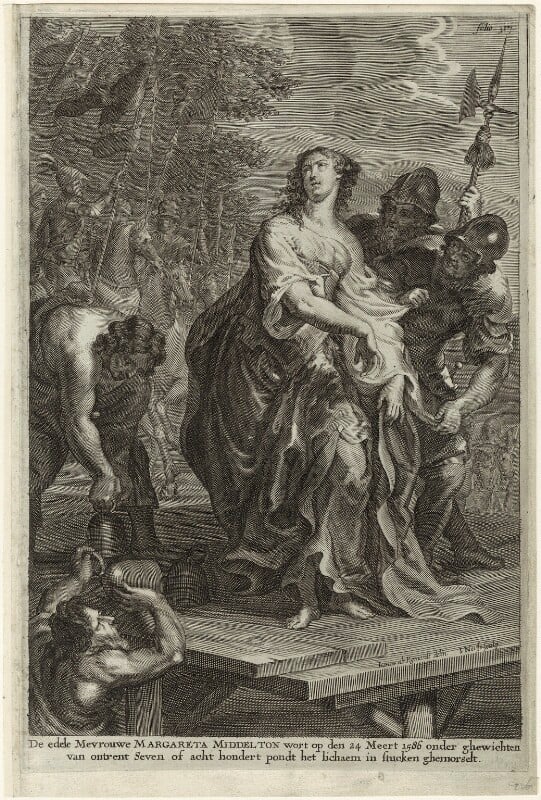
by Jacob Neeffs (Neefs)
line engraving, early to mid 17th century
NPG D25599© National Portrait Gallery, London
Margaret Clitherow, also known as the pearl of York, was born to Thomas and Jane Middleton in 1552 and was likely baptised at St Martin’s church. When she was 18 she married the butcher John Clitherow, and subsequently moved to the shambles, where she would live for the remainder of her life. Whilst both her parents and her husband were devout protestant supporters, in around 1574 Margaret converted to Catholicism. She was deeply moved by the stories of priests who suffered for their faith, and the rest of her life was underpinned by this fascination with martyrdom. Her recusancy would frequently draw the attention of the authorities, resulting in fines levied against her husband and three periods of imprisonment in York castle. Despite these punishments, Margaret was never deterred from following her faith, and she utilised the time she spent incarcerated in order to strengthen her religious commitment through prayer and fasting. It was also during her stay at York Castle that she learnt to read Latin, obtaining just enough knowledge of the language to engage with simple devotional works.
“For the spirit of God wrought so graciously in her, that all troubles, persecutions, and cruelty practised against her for catholic religion and conscience’ sake daily increased more and more the constancy of her faith” (370)
– The words of John Mush in ‘The Troubles of our Catholic Forefathers related by themselves.’
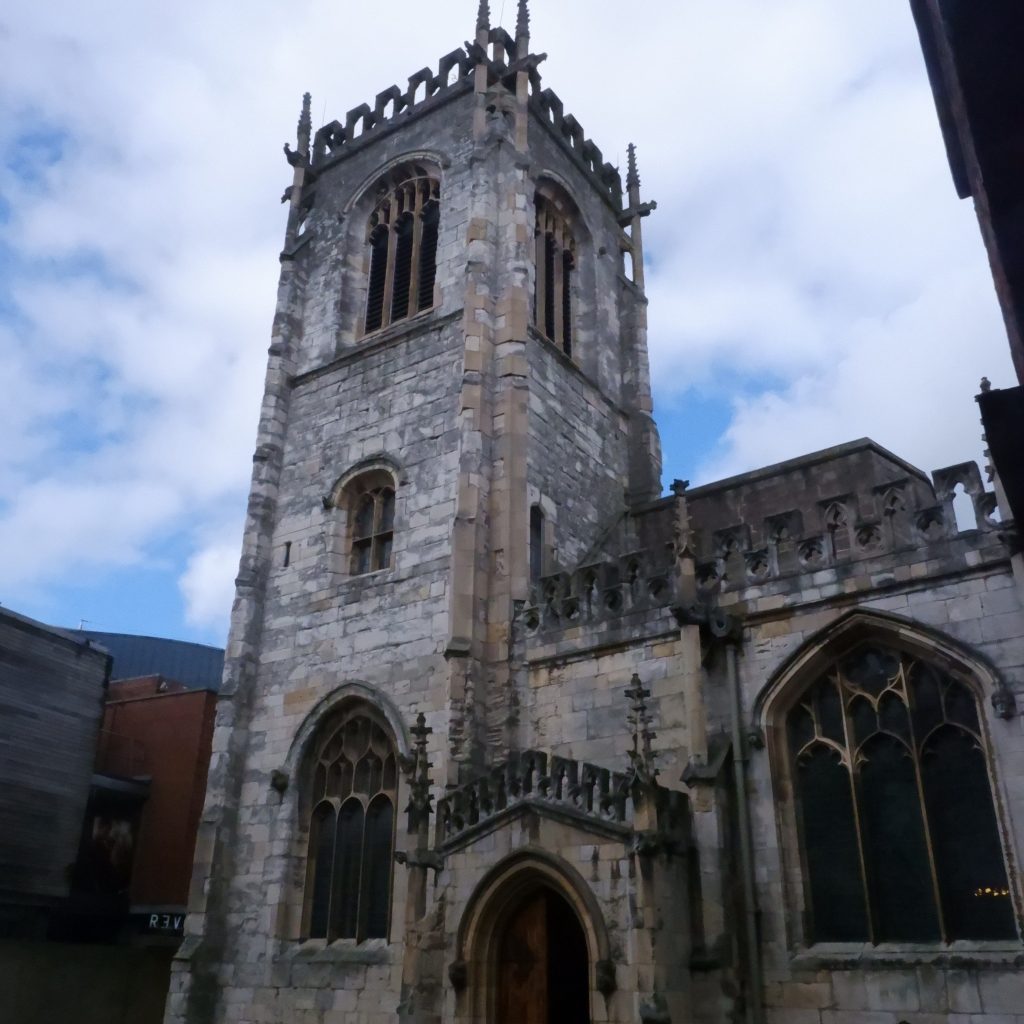
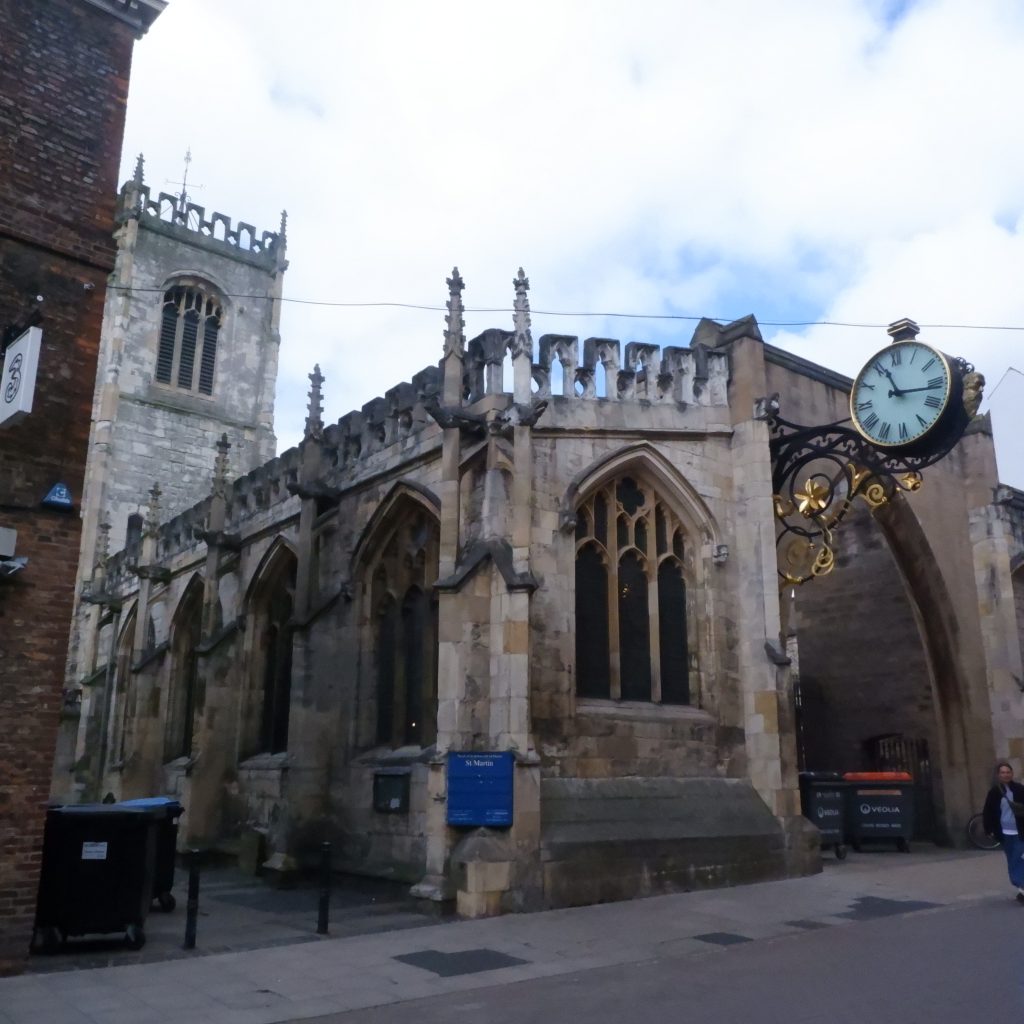
Her Pilgrimage
During this period Margaret came in contact with the catholic priest John Mush, and the two developed a close relationship for the remainder of Margaret’s life. Mush held Clitherow in high esteem, and he wrote in great detail of her piety and his admiration towards her devotion. In one such account he details her fascination with a group of priests that had been martyred at Knavesmere. Margaret took it upon herself to visit the site of this atrocity, and along with a few other women she set out on a pilgrimage to pay her respects at the site of their death. The intensity of anti – Catholic sentiment during this period meant the pilgrimage had to be conducted in secret under the cover of darkness. Despite the dangers Margaret fulfilled the duty she felt compelled to undertake.
Practising Catholicism
Her defiance of protestant rule didn’t just come in the form of private pilgrimages, as she also provided places of sanctuary to those catholic priests which were being targeted by Elizabeth’s new legislation. Secret rooms were constructed in both her and her neighbour’s houses in which these priests could remain hidden from the authorities. These spaces also allowed Margaret the opportunity to provide her neighbourhood with access to catholic sacraments, suggesting her importance came not only from her own devotion but her ability to facilitate the devotion of others. Her children provide examples of this, as at least two of them followed in her religious footsteps. Henry, Margaret’s eldest son, was sent to France in order to train as a priest in 1584, and her daughter, Anne, went to live at St Ursula’s Convent. It was ultimately this dedication to providing others with access to Catholic services and teachings which would lead to her final arrest in 1586.
The details surrounding her arrest:
On the morning of the 10th of March 1586, the authorities arrived at Margaret’s home with the intention of searching the property. Her husband had already been removed from the scene, having been called before the council to answer questions on an unrelated matter. Upon their arrival, Margaret, who was already suspicious in light of her husband’s absence, was busy with the housework. They conducted a thorough search of her home, yet despite their efforts no evidence of catholic activities could be acquired. In a fit of rage they arrested all the members of the household, and in their custody, Margaret left her home on the Shambles for the last time.
“The searchers greedy of a prey, came in great haste to the chamber, and not finding him, they raged like madmen.” (410)
– The words of John Mush in ‘The Troubles of our Catholic Forefathers related by themselves.’
Also in their custody, was a young boy who had been part of the household. In order to establish some concrete proof of the activities which had taken place, they pinpointed him for questioning. Under the threat of being beaten they managed to coax a confession out of him, and he led them to the locations of the secret sanctuaries Margaret had established. With this new found evidence, Margaret was immediately brought before the council. Despite being fully aware of the consequences for the crime of which she was accused, she remained staunchly adamant in her refusal of a trial. In his biography of her, John Mush reflected upon her attitude towards her arrest, “The martyr was brought before the council, and being merry and stout for the catholic cause, thereby moved their fury vehemently against her.” (411)
On several occasions members of the council tried to get Margaret to comply with their proceedings, promising her a lessened sentence if she were to heed to their demands. There were even suggestions that Margaret may have been pregnant, which could have impacted her position, yet she refused to confirm whether this was true. Despite their attempts, no headway was made, and Margaret remained adamant in her refusal to heed their wishes. It is believed that one of the reasons Margaret remained so obstinate in her denial of a trial, was out of fear for what it could mean for her children. She was reluctant to put them in a position where they would have to testify in court. Throughout the process she aligned herself with the catholic martyrs who had come before her, and believing God to be her judge, consigned herself to her fate.
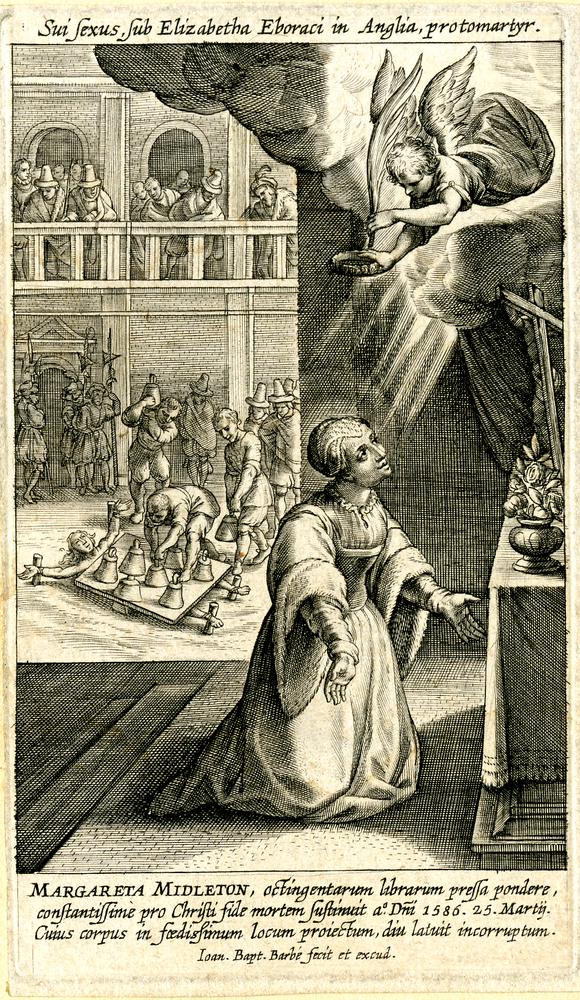
© The Trustees of the British Museum. Shared under a Creative Commons Attribution-NonCommercial-ShareAlike 4.0 International (CC BY-NC-SA 4.0) licence.
Her Execution:
Prior to her execution Margaret was held at Kidcotes prison, which was attached to the Ouse bridge, and it was in the nearby tollbooth that the execution was set to happen. In light of her admiration for other martyrs, and her frequent trips to Knavesmere, Clitherow had requested that she could be killed in the same location. This request however, was denied. At the appointed time she was escorted away from the prison, “barefoot and barelegged,” (430) under the watchful eye of the many people who had come out to witness the event. Despite her situation Margaret remained jovial throughout, dealing alms to the poor as she made her way to the tollbooth.
Upon arriving Margaret knelt down to say her prayers alone, refusing to pray alongside those that had brought her there. Her final prayer she dedicated to Queen Elizabeth, calling for God to turn her to the catholic faith, for she wished “as much good … to her majesty’s soul as to [her] own.” (431) Margaret also refused to acknowledge her crime of treason, claiming she was “dying for the love of my Lord Jesu.” (431) Despite her pleas the sheriff instructed her to be naked for her death, and she was permitted to wear nothing but a linen habit. Once laid down a handkerchief was placed over her face and her hands were bound to two posts, leaving her in the formation of a cross. A door was placed over the top of her, with a sharp stone beneath her back, and weights were slowly added, amassing around 800 pounds. Her date of death was the 25th of March 1586.
“Thus most victoriously, this gracious martyr overcame all her enemies, passing [from] this mortal life with marvellous triumph into the peaceable city of God.” (432)
– The words of John Mush in ‘The Troubles of our Catholic Forefathers related by themselves.’
Afterlife:
Before her death Margaret was able to leave one final message to some of her family members. To her husband, she left a symbol of her love and duty towards him in the form of her hat. To her eldest daughter Anne, she left her hose and shoes in the hope she would remember to follow in her footsteps. Mush in particular was very affected following her death, and he wrote vehemently against the protestant authorities in his biography of her life. “Not one religious house standeth, not one alter unrased and undefiled, not one church free from heretics and heresy, not one sacrament rightly administered, nor one religious person to be found, not one catholic priest but judged as a traitor or able to escape unmurthered, not one known catholic man or woman suffered to live without intolerable vexation and continual danger of liberty to be lost, of lands and goods, yea, of life and blood.” (363)
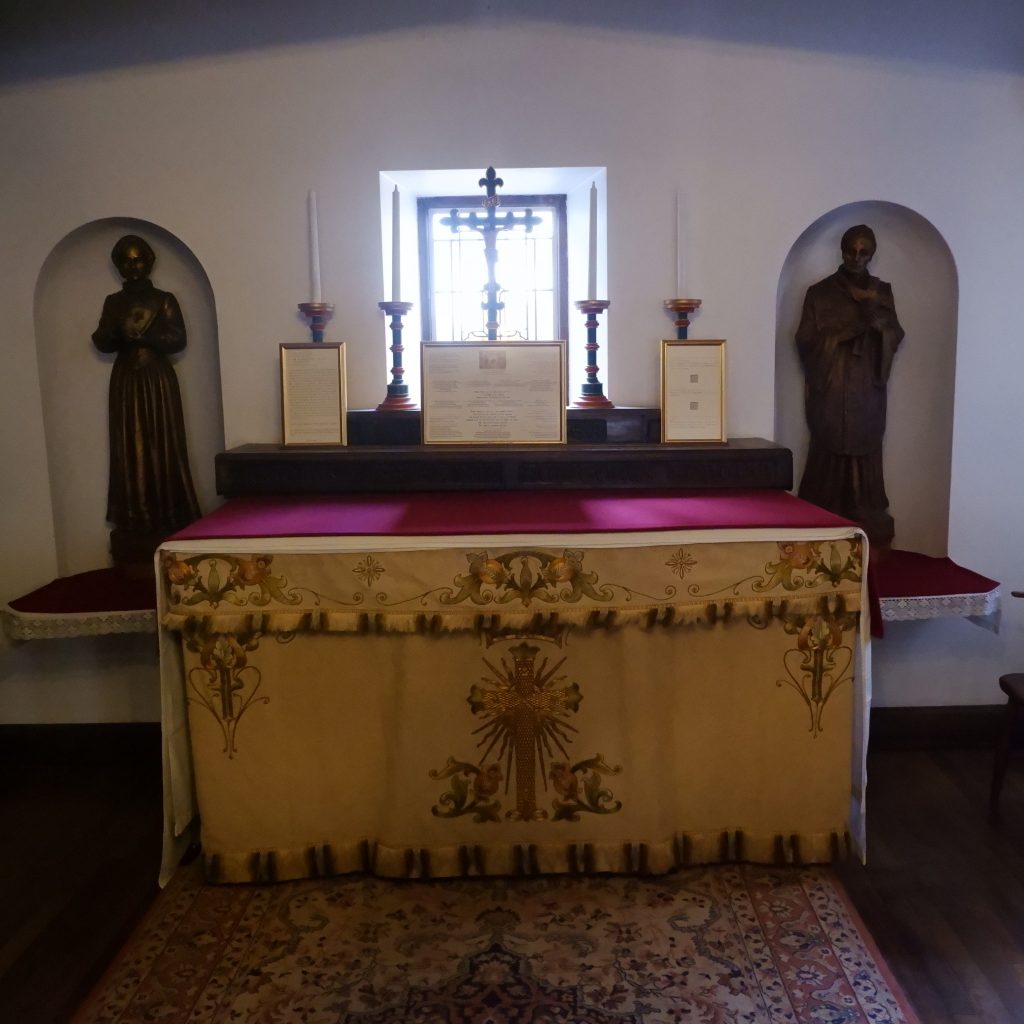
Mush is also thought to be one of the group responsible for tracking down Margaret’s body, and securing her hand as a symbol of her martyrdom. The hand now rests under the protection of the Nuns at the bar convent in York, and can be viewed through appointment with a small donation. Margaret’s legacy continued to grow following the events of her life. In 1929 she was beatified, an act which declared her to have been blessed and worthy of public veneration. This was followed in 1970 when she was officially canonised, becoming one of the recognised saints, with her day of celebration taking place on the 26th of March. Margaret’s strange and brutal death stands as a stark reminder as to the consequences of religious anxiety in the period, and her unwavering devotion to God is something still celebrated in Catholicism today.
Timeline:
- 1509: Henry VIII became King
- 1534: Act of supremacy – Henry VIII declared himself as the supreme head of the church of England
- 1536 – 1541: Dissolution of the monasteries
- 1547: Edward VI became King
- 1552: Margaret Clitherow was born
- 1553: Lady Jane Grey crowned Queen for 9 days
- 1553: Mary I became Queen
- 1558: Elizabeth I became Queen
- 1559: Religious settlement
- 1568: Mary Queen of Scots abdicated her throne
- 1570: Elizabeth I was excommunicated by the Pope
- 1571: Margaret married John Clitherow
- 1574: Margaret converted to Catholicism
- 1581: became treason to convert to Catholicism
- 1582 – 1583: Margaret went on pilgrimages to Knavesmere
- 1584: Henry was sent to France to train as a priest
- 1585: Catholic priests ordered to leave the country
- 1586: Margaret Clitherow was arrested and executed
- 1586: John Mush write ‘A true report of the life and Martyrdom of Mrs Margaret Clitherow’
- 1587: Mary Queen of Scots executed
- 1929: Margaret Clitherow was beatified
- 1970: Margaret Clitherow was canonised
References:
- All of the quotes used in this blog are from ‘The troubles of our Catholic Forefathers’ written by John Mush and edited by John Morris.
Lake, Peter. The trials of Margaret Clitherow: Persecution, Martyrdom and the politics of sanctity in Elizabethan England. Continuum, 2011.
Mush, John. “A true report of the Life and Martyrdom of Mrs Margaret Clitherow.” The troubles of our Catholic Forefathers, third series, Edited by: John Morris, Burns and Oats, 1877, pp. 360 – 440. https://www.google.co.uk/books/edition/The_Troubles_of_Our_Catholic_Forefathers/oUVBAAAAMAAJ?hl=en&gbpv=1
Sheils, William Joseph. “Mush [alias Ratcliffe], John (1552–1612), Roman Catholic priest and author.” Oxford Dictionary of National Biography. September 23, 2004. Oxford University Press. https://www.oxforddnb.com/view/10.1093/ref:odnb/9780198614128.001.0001/odnb-9780198614128-e-19669
Walker, Claire. “Clitherow [née Middleton], Margaret [St Margaret Clitherow] (1552/3–1586), Roman Catholic martyr.” Oxford Dictionary of National Biography. September 01, 2017. Oxford University Press. https://www.oxforddnb.com/view/10.1093/ref:odnb/9780198614128.001.0001/odnb-9780198614128-e-5692
Walking the Footsteps: Click here to find out more about some of the locations mentioned in this post.
Other stories: Click here if you would like to learn about other stories which take place in York.